From Hmong Girls Leadership to Civil Engineering: Elizabeth Lor’s Journey of Resilience and Purpose

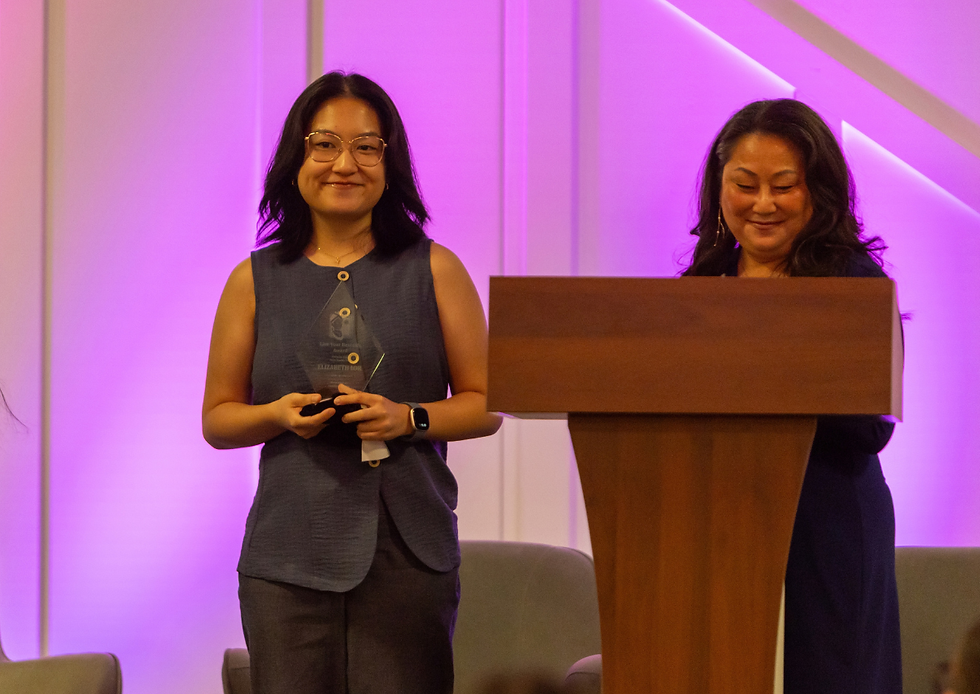
Elizabeth describes her best life as one where she can use everything she has learned to build something meaningful for herself while contributing to the lives of others. We think Ilean would have understood that vision very well. The Live Your Best Life Grant was created because she believed that the dreams of Hmong women were worth investing in. And Elizabeth, your dream is worth investing in.
In 2018, Elizabeth Lor was a shy young girl who wasn’t quite sure what leadership meant or what her future might look like.
Today, she is pursuing a civil engineering degree at the University of St. Thomas, serves in leadership with the Society of Women Engineers, has dedicated more than 200 hours to volunteering, mentors younger students, and has been selected as the recipient of Hnub Tshiab’s 2026 Live Your Best Life Grant.
For Elizabeth, the journey between those two points has not always been easy. But it has taught her that living her best life isn’t about avoiding difficulty—it’s about continuing to show up.
Finding Her Voice

Elizabeth first connected with Hnub Tshiab in 2018 through its Hmong Girls Leadership Program. At the time, she was a young teenager and described herself as shy and reserved.
The program brought together Hmong girls from different age groups to talk about leadership, identity, and what it meant to grow into a young Hmong woman.
Looking back, Elizabeth recognizes how meaningful it was to have a space where she could learn alongside other girls and begin thinking more deeply about who she was and who she wanted to become.
“I think at that point, I didn't realize how important it was to have a space to be there with leadership and learning,” she shared.
Years later, receiving the Live Your Best Life Grant from the same organization has given Elizabeth another opportunity to reflect on just how much she has grown.
She says the recognition has come in phases—from shock, to happiness, to realizing that the award represents recognition for the hard work that brought her to where she is today.
“It shows my growth,” Elizabeth said.
Choosing to Keep Going
Elizabeth’s path through college has included challenges that extended her graduation timeline. As a first-generation college student, she entered higher education without always having the support or knowledge needed to navigate it. She also faced undiagnosed ADHD, mental health challenges, academic setbacks, and periods of low confidence.
There were times when she considered leaving school. There were also times when she failed courses and had to try again.
But Elizabeth kept going.
She is now a fifth-year undergraduate civil engineering student and expects to graduate in Spring 2028. Her experiences have shaped the way she thinks about resilience.
For Elizabeth, “living your best life” does not mean having a life without setbacks. It means choosing to show up, even when things are difficult.
“It can be so easy to just give up,” she said. “Just kind of choosing to show up and to keep going.”
That mindset has become especially meaningful as she works toward her engineering degree. Because her graduation timeline has extended beyond the period covered by her institutional financial aid, Elizabeth expects to rely on private student loans to complete her remaining semesters. The $1,000 Live Your Best Life Grant will be applied directly toward her tuition and reduce the amount she needs to borrow.
But the meaning of the grant goes beyond the financial assistance.
In her application, Elizabeth wrote that receiving the grant would mean knowing that someone else believes her goal is worth investing in.
After navigating years of uncertainty and setbacks, that feeling of being believed in matters.
“It feels nice,” she explained. “After all these hardships, it’s still good to have someone cheering you on and just be like, ‘Okay, I’m here to support.’”
Building a Future in Engineering

Elizabeth chose civil engineering because she enjoys curiosity, problem-solving, and taking on challenging questions. But her interest in the field is about more than solving technical problems.
She is drawn to the way civil engineering can directly affect people’s lives.
As she has learned more about the field, she has become increasingly interested in the role infrastructure plays in safety, communities, and quality of life. She hopes to eventually contribute to projects that make people’s lives safer and stronger—using both her technical skills and her empathy.
Her perspective is also shaped by her experience as a Hmong woman entering a field where she doesn’t often see people who look like her.
Elizabeth has had to navigate the expectations that can come with being a young Hmong woman, including assumptions about what women should pursue and what their lives should look like.
Pursuing higher education and engineering has sometimes meant having difficult conversations about what she wants for her future.
Rather than viewing those conversations as simply a conflict between generations, Elizabeth tries to understand the cultural expectations behind them while also advocating for herself and the life she wants to build.
For her, pursuing engineering is part of redefining what is possible.
“I feel like there’s that way of how I approach it,” she explained. “It’s more like us versus the problem.”
Giving Back by Helping Others Find Their Way
Elizabeth’s commitment to service has become another important part of her journey.
Since beginning her volunteer work around 2023, she has accumulated more than 200 hours of service. She has volunteered with public libraries as a reading and homework tutor, worked with elementary school students and teachers, and helped with summer camps, including STEM-focused programs.
For Elizabeth, volunteering is not simply about accumulating hours.
She sees herself in some of the students she works with.
Elizabeth remembers struggling with school herself and recognizes that sometimes a student’s difficulty isn’t because they don’t want to learn—it may be because the way information is being presented doesn’t work for them.
Her role is to help students identify those learning gaps and, rather than simply giving them the answer, provide them with tools to figure things out themselves.
One of her favorite moments is seeing the moment when something finally clicks for a student.
“That great moment in their head when it starts to click and the pieces start to piece together,” she said, is deeply rewarding.
Her volunteer work has also helped Elizabeth recognize her own resilience.
As a first-generation college student, she understands the power of education and the importance of having someone who can help you see possibilities for yourself.
She wants to provide that same sense of possibility to younger students.
Many of the children she works with are curious about what it means to be a college student. When they learn that Elizabeth is pursuing engineering, it opens the door to conversations about higher education and careers they may not have considered for themselves.
For Elizabeth, representation matters.
She doesn’t want young people to limit themselves based on assumptions about who belongs in certain careers or spaces.
The Legacy Behind the Live Your Best Life Grant
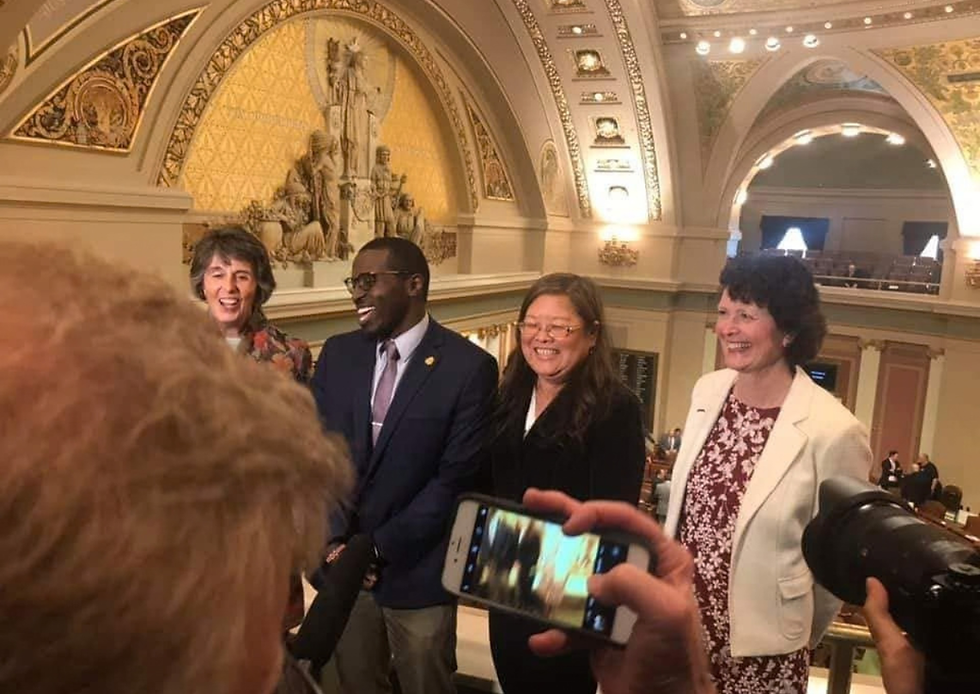
The Live Your Best Life Grant carries a legacy that is deeply connected to Hnub Tshiab’s work of investing in Hmong women.
The grant honors the memory of Ilean Kao Ly Her, a beloved leader and advocate in the Hmong community who passed away in 2021. Ilean served as a board member of Hnub Tshiab for many years and was actively involved in programs including the Hmong Girls Leadership Institute and the Girls Enterprise Zone.
In 2017, Ilean launched the Live Your Best Life mini-grants to support Hmong women as they pursued personal goals and dreams.
After her passing, Ilean’s family, friends, and community members came together to establish the Ilean Her Endowment, housed at the Saint Paul & Minnesota Foundation. Each year, the endowment provides a $1,000 grant to a Hmong woman who demonstrates both a meaningful personal goal and financial need to pursue it.
For Elizabeth, receiving the grant is especially meaningful because her own Hnub Tshiab journey began years earlier as a participant in the Hmong Girls Leadership Program.
She was once a young girl being given a space to learn, grow, and explore her potential.
Today, she is receiving an investment in the future she is working so hard to build.
Elizabeth describes her best life as one where she can use everything she has learned to build something meaningful for herself while contributing to the lives of others. We think Ilean would have understood that vision very well. The Live Your Best Life Grant was created because she believed that the dreams of Hmong women were worth investing in. And Elizabeth, your dream is worth investing in.
Tru, Hnub Tshiab, a board member, shared.
A Full-Circle Journey

There is something especially meaningful about Elizabeth receiving the Live Your Best Life Grant from an organization she first encountered as a young girl.
In 2018, Hnub Tshiab provided Elizabeth with a space to explore leadership and identity. Today, she is continuing that journey—not only by pursuing her own goals, but by helping younger students believe in their own potential.
Her definition of leadership has changed, too.
As a young participant, she had a different idea of what a leader looked and sounded like. Over the years, she has learned that leadership can take many forms.
Now, she hopes to continue growing into leadership roles and become the kind of person who can create opportunities for others.
Her advice to young girls who are interested in STEM but aren't sure they belong is simple: don't let fear or someone else's expectations become your limitations.
Fear may not completely disappear, she says. But you can learn to move forward while you're afraid.
“You’re going to be scared,” Elizabeth said. “But you also never know if you tried.”
That philosophy reflects the heart of Elizabeth’s journey.
She has faced setbacks. She has questioned herself. She has had to take a longer road toward her degree. And she is still showing up.
For Elizabeth, that is what it means to live her best life.
And perhaps the most powerful part of her story is that the young girl who once found a place to learn about leadership through Hnub Tshiab is now becoming the kind of leader who creates space for others to see what might be possible.
Her journey is still unfolding. But one thing is clear: Elizabeth is not allowing other people's expectations to define the limits of what she can become.


Comments